


13 November 2026
Beyond white: anthracite, wood-effect finishes and RAL colours give your home character. We show the options and...
Triple glazing has long been standard in new builds across Central Europe – but is it also worth it when replacing windows? And when is modern double glazing enough? In this article we compare double and triple glazing in terms of insulation, weight, light transmission and cost.
Double glazing consists of two panes of glass with a cavity filled with inert gas (usually argon). A low-emissivity coating on one pane reflects room heat back inside. Triple glazing adds a third pane and therefore a second gas-filled cavity – heat loss falls significantly once again.
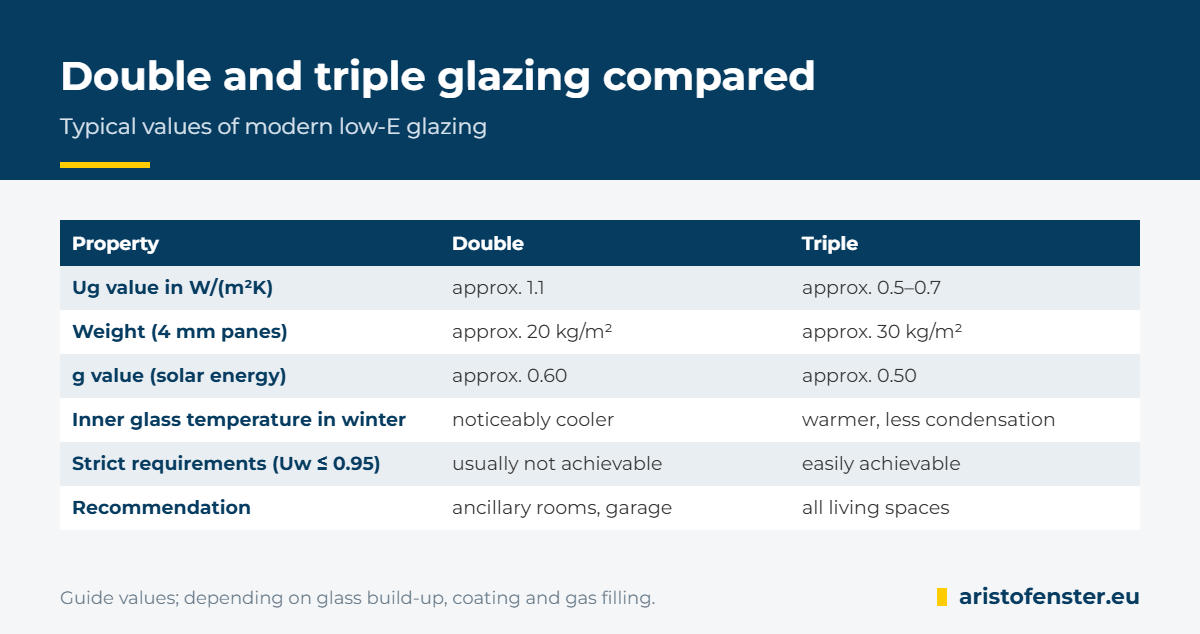
Modern double glazing reaches a Ug value of around 1.1 W/(m²K), triple glazing 0.5 to 0.7 W/(m²K). This roughly halves the heat lost through the glass. Another advantage: the inner glass surface stays warmer in winter. This makes it more comfortable near the window and reduces the risk of condensation.
Each additional pane of 4 mm glass adds around 10 kg per square metre. Triple glazing is therefore about a third heavier than double glazing. Modern profiles and hardware are designed for this – but for very large sashes or lift-and-slide doors, the hardware must be dimensioned accordingly.
Triple glazing lets through slightly less light and solar energy (g value approx. 0.50 instead of 0.60). In practice, this disadvantage is more than offset by the better insulation, especially for windows facing north, east or west.
Which glazing suits your windows?
We advise you on triple glazing, acoustic and safety glass – tailored to your location and budget.
Besides the number of panes, the glass can be specified for particular needs: acoustic glass for windows facing busy roads, safety glass (e.g. P4A) for burglar resistance, solar control glass for large south-facing windows or obscure glass for bathrooms and front doors. A warm edge spacer instead of an aluminium one further improves the Uw value.
Read more about insulation values in our article The window U-value explained. You will find our window systems under PVC windows.
New windows with triple glazing
Request your no-obligation quote – with exact Ug and Uw values.
Beyond white: anthracite, wood-effect finishes and RAL colours give your home character. We show the options and...
A few simple tasks a year keep windows tight and running smoothly. Here is how to care...
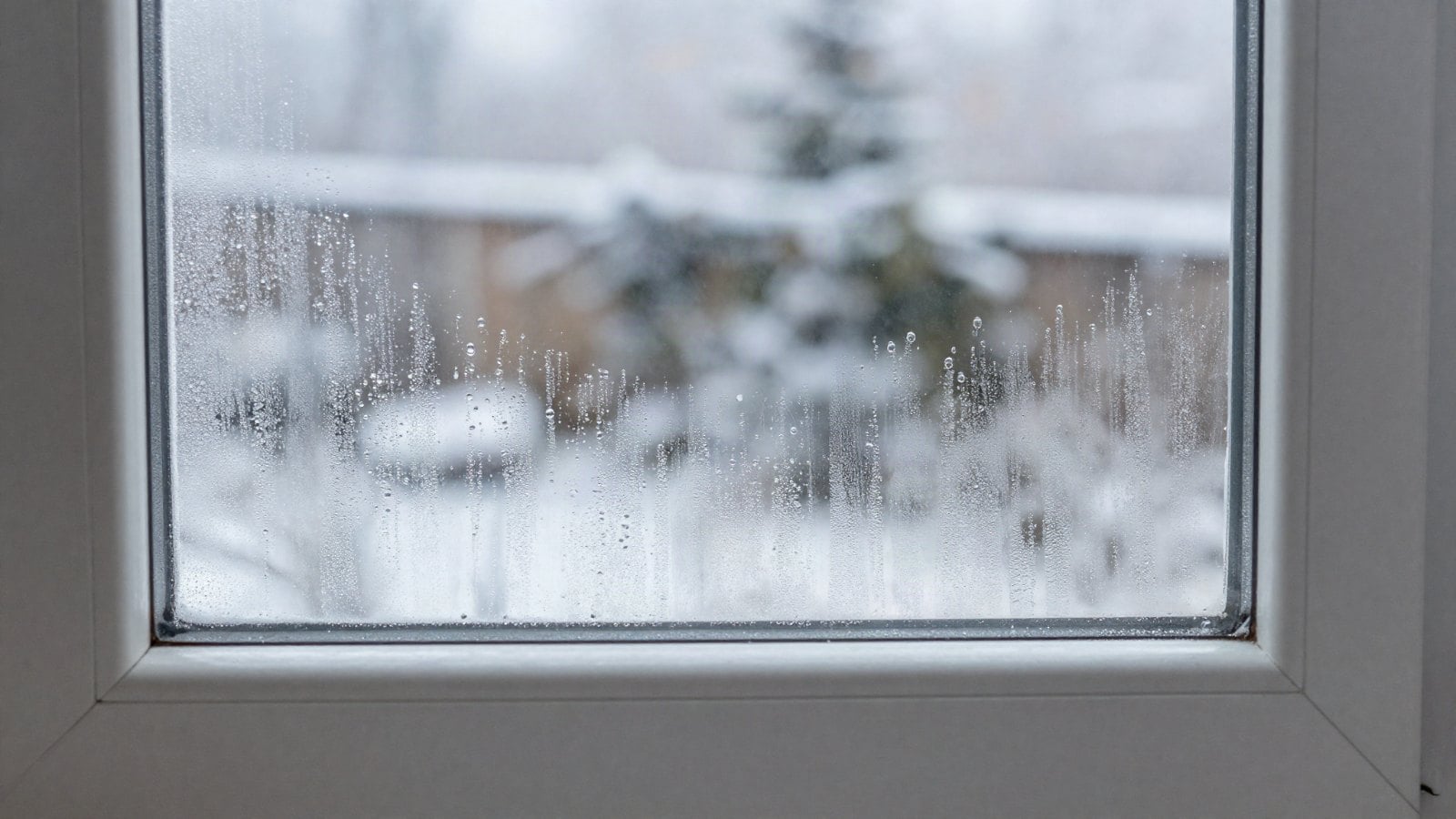
Misted panes on the inside, the outside or between the glass? We explain what condensation on windows...