



13 November 2026
Beyond white: anthracite, wood-effect finishes and RAL colours give your home character. We show the options and...
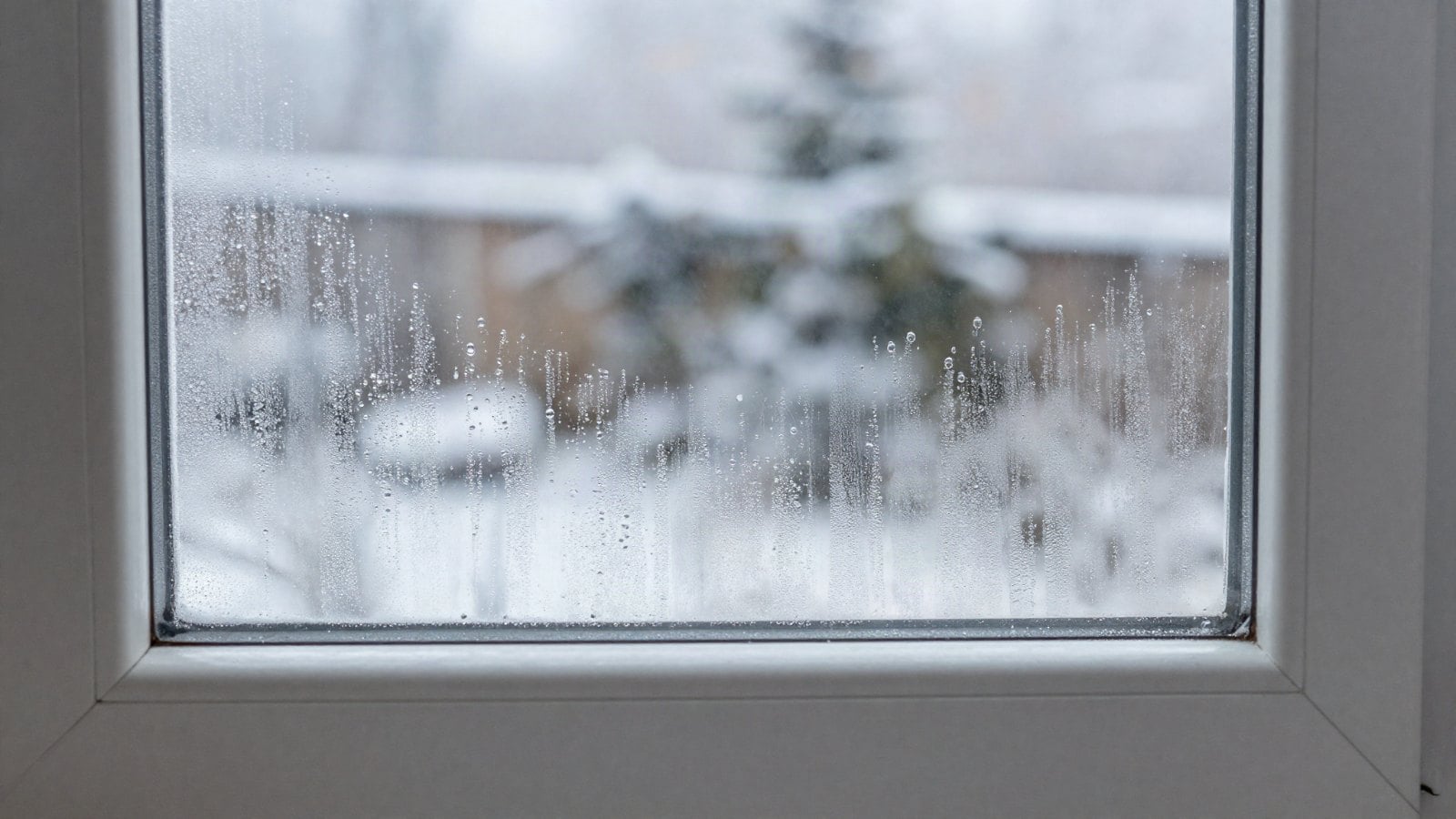
In the morning the pane is misted up and droplets collect on the frame – condensation on windows is a common nuisance in winter. Whether it is harmless or a sign of a problem depends on where the water forms. We explain the causes and show you how to ventilate properly.
Warm air can hold more moisture than cold air. When moist indoor air meets a cold surface, it cools down and the moisture settles as water. The temperature at which this happens is called the dew point. The higher the humidity in the room and the colder the surface, the more likely condensation becomes.
This is the most common case. It is usually caused by excessive humidity – from cooking, showering, drying laundry or lots of plants – combined with a cold glass surface. Old windows are particularly affected, as is the edge of the glass if it has an aluminium spacer. Modern windows with triple glazing and a warm edge spacer have much warmer inside surfaces.
If the pane mists up on the outside in the morning, that is a good sign: the glazing insulates so well that the outer pane receives hardly any heat from inside and cools down considerably at night. This mainly happens in autumn and disappears as soon as the sun warms the glass.
If moisture forms in the cavity between the panes, the edge seal is leaking. The insulated glass unit has then lost its insulating effect and should be replaced.
Misted windows? We can help.
We check whether your windows are still up to date and advise you on glazing, warm edge spacers and ventilation.
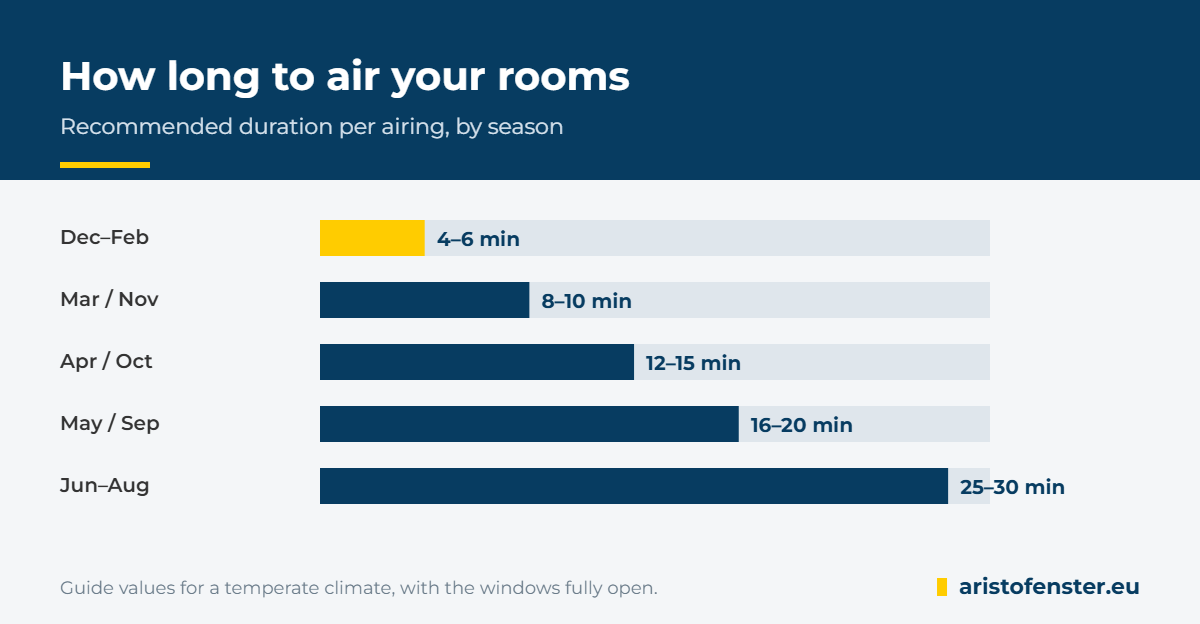
Modern windows are very airtight. This saves energy, but it also means that moisture no longer escapes unnoticed through gaps. When you replace your windows, plan how fresh air will get in – for example with trickle vents in the window frame, which ensure a controlled minimum air exchange, or with a mechanical ventilation system with heat recovery. In Germany, for example, the DIN 1946-6 standard requires a ventilation concept when more than a third of the windows in a house are replaced.
If your windows keep misting up despite proper ventilation, they are probably getting on in years. Read our articles 7 signs you need new windows and Double or triple glazing.
New windows against condensation
Modern triple glazing with a warm edge spacer keeps the inner pane warm. Request your no-obligation quote.
Beyond white: anthracite, wood-effect finishes and RAL colours give your home character. We show the options and...
A few simple tasks a year keep windows tight and running smoothly. Here is how to care...
Draughts, misted panes, stiff sashes: these seven signs show that new windows are worth it – plus...